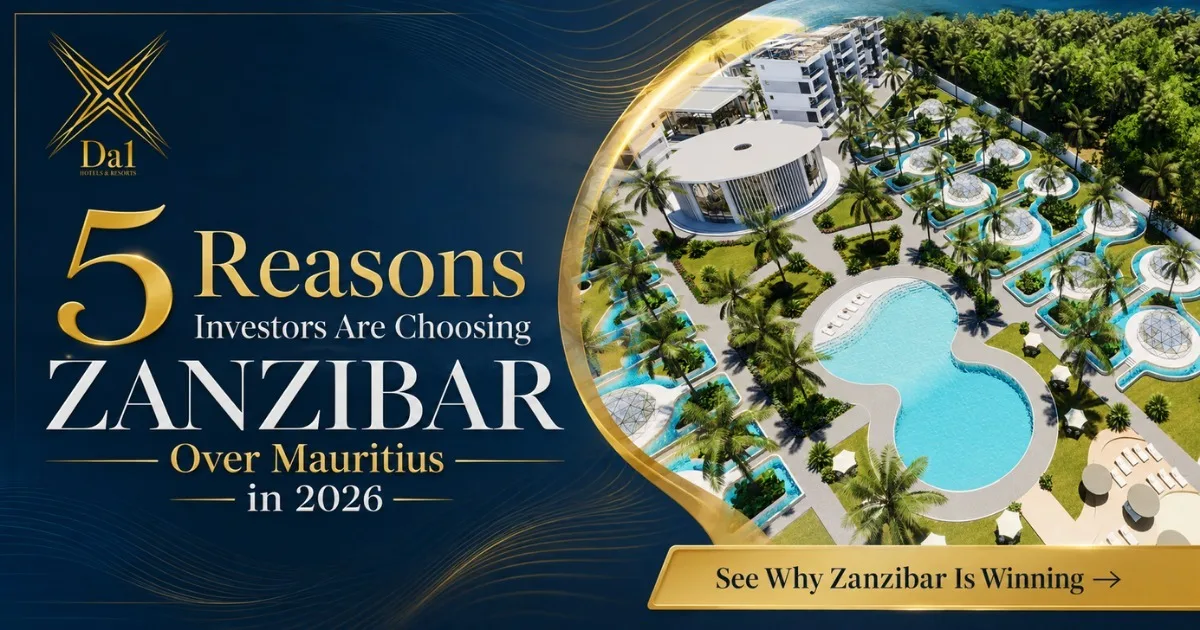
5 Reasons Investors Are Choosing Zanzibar Over Mauritius in 2026
For decades, Indian Ocean real estate investment has meant one place: Mauritius. But that's starting to change. Anyone still putting money into Mauritius just because that's where the money has always gone is already a step behind the buyers quietly closing deals in Zanzibar.
For decades, Indian Ocean real estate investment has meant one place: Mauritius. But that's starting to change. Anyone still putting money into Mauritius just because that's where the money has always gone is already a step behind the buyers quietly closing deals in Zanzibar.
For years, Mauritius property investment was the safe pick. Established resorts, established law firms, a track record everyone trusted. Nothing wrong with that, until it stops paying off. Rental yields in Mauritius have been slipping for a while now. Land in Grand Baie and Belle Mare costs more than the numbers can really justify. And most beachfront plots worth building on already have two or three offers sitting on the table.
About a thousand kilometres north, Zanzibar real estate investment has been building momentum, and it's hard to miss if you're paying attention.
Beachfront land there is still on the market, not something you only hear about through a private contact. The government incentives for foreign buyers are better than they've been in years. And the type of investor who usually shows up years after everyone else has already started flying in, walking plots in Nungwi and Paje, and signing paperwork.
This isn't meant to sound dramatic; it's just how these markets tend to work. Zanzibar still counts as an emerging luxury real estate market, and that window doesn't stay open forever. Once it closes, prices move fast, the same way they did in Bali and in Phuket a decade ago. And to be clear, property investment always carries risk. Currency shifts, regulation changes, construction delays — all of it. Nothing here is a promise of returns. With that out of the way, here's what's pulling investors toward Zanzibar hospitality investment this year.
Zanzibar vs. Mauritius at a Glance
| Investment Factor | Zanzibar, Tanzania | Mauritius |
|---|---|---|
| Market stage | Early-stage, high-growth luxury market | Mature, mostly built-out luxury market |
| Entry price, prime beachfront | $2,000 to $3,800 per m² | $5,500 to $9,000+ per m² |
| Typical net rental yield | 9% to 14% | 4% to 7% |
| Annual capital appreciation | 12% to 16% (estimated) | 3% to 5% |
| Foreign buyer residency route | Strategic Investment Project status, from around $100,000 | Property Development Scheme, from around $375,000 |
| Capital gains tax on qualifying projects | 0% under Strategic Investment status | Standard Mauritius rates apply |
| Key long-haul carriers | Qatar Airways, Emirates, Flydubai, Turkish Airlines | Established routes, limited new capacity |
Numbers above are approximate, pulled from recent listings, regional brokerage estimates, and public government program details. They'll shift depending on the property, developer, and time of year, so check current figures before making any decision.
1. The Entry Price Still Makes Sense in Zanzibar
This is the part every investor eventually asks about.
Beachfront land in Mauritius costs what it costs because Mauritius has already gone through its growth phase. You're buying into a finished market, which means paying finished-market prices, often above $5,500 per square meter for a decent plot, and getting back yields around 4 to 7 percent based on regional brokerage estimates. That's a solid, steady return. It's just not the kind of number that makes anyone excited about a frontier hospitality play.
Zanzibar beachfront property is still going for around $2,000 to $3,800 per square meter for similar coastal land, based on recent listings and conversations with local developers. Add in strong year-round occupancy and growing demand for well-run five-star properties, and net rental yields on solid Zanzibar developments are landing in the 9 to 14 percent range. Same ocean, similar buyer, very different math. As always, these figures shift by property and operator, so ask the developer or a local advisor for current numbers before you commit.
2. Zanzibar Changed Its Rules for Foreign Buyers
A few years back, buying property in East Africa as a foreigner meant paperwork, delays, and a very patient lawyer. That reputation doesn't really hold anymore.
The Zanzibar government has rebuilt its investment framework to bring in serious hospitality capital, and the incentives are real:
| Incentive | What It Covers |
|---|---|
| Strategic Investment status | Import duty exemptions on construction materials and hotel equipment |
| Residency pathway | Long-term residency for qualifying investors and their immediate family |
| Corporate tax holiday | Lower corporate tax rates for approved hospitality projects |
| Capital gains treatment | Zero capital gains tax on qualifying investments |
| Minimum investment | Around $100,000 under Strategic Investment Project status |
Mauritius has its own Property Development Scheme, but you're looking at around $375,000 to qualify for residency. Zanzibar's threshold is a lot lower, and right now the government is courting foreign hospitality investors instead of just putting up with them. Program terms can change, though, so confirm current thresholds with a qualified immigration or investment lawyer before you commit any money.
3. Travelers Have Already Moved On From the Old Model
Here's something worth noticing: travelers with real money to spend aren't chasing giant all-inclusive resorts the way they used to. They want a safari, a beach, some culture, an actual story to tell afterwards.
Zanzibar happens to sit right in the middle of that shift. It pairs naturally with a Serengeti or Ngorongoro safari on the mainland, so villas and hotel suites here get a steady stream of guests through both peak and shoulder season. Mauritius, as a standalone beach destination, is now up against every other island in the world pitching the same idea.
4. The Roads and Airport Caught Up Fast
None of this matters if people can't get there, and this is where Zanzibar has closed the gap fast.
The upgraded terminal at Abeid Amani Karume International Airport now takes long-haul, wide-body flights directly, so travelers don't have to connect through another hub. Qatar Airways, Emirates, Flydubai, and Turkish Airlines have all added direct routes into the island, along with more European charter flights. On the ground, the roads linking Stone Town to Nungwi, Kendwa, Matemwe, and Paje have been repaved, so the island's fastest-growing beach areas are finally well connected to the airport.
Not the most exciting part of the story, but it's the part that keeps hotels full.
5. There's Still Room to Get In Early
Mauritius already has hundreds of established hotel brands sitting on nearly every good stretch of coastline. There's just not much room left for a new buyer to grab prime beachfront there.
Zanzibar isn't in that spot yet. It's still becoming what it's going to become, and that's usually the exact point in a market where early buyers end up owning the coastline everyone else wishes they'd bought into. Working with an established regional operator to manage a branded villa or hotel suite here can bring in rental income now, with the value of the property climbing as the rest of the coastline fills in around you. As always, projected appreciation is an estimate, not a guarantee, so weigh it against the specific project and operator before deciding.
So Where Does That Leave You
Markets like this don't stay quiet forever. Zanzibar's current pricing and yield advantage exists because it's still early, and early doesn't last. As more institutional money moves in, prices tend to catch up toward what buyers already expect in a mature market like Mauritius, and the gap starts to close.
If you've been sitting on this decision for a while, this is a decent year to stop sitting on it.
Da1 Hotels & Resorts offers investors exactly this kind of opportunity: curated, investment-ready hospitality assets along the Zanzibar coastline, built for both rental income and long-term growth. As with any international property investment, independent legal and financial advice is recommended before committing.